Sunday, January 03, 2010

Out with the "Old", In with the "New" (#3/365)

Still haven't run a roll of film through - the weather's been too crappy to go outside with it. But the more I play around with the EOS-1 the more I really like it. Feels a lot like my D200 with much more simplicity. My favorite feature? AE locking works such that you push the button and it stays on without needing to hold down an AE button. I LOOOOVE my now defunct F4S, but the EOS-1 may well be the first camera I ever use where I can operate it totally by feel. So simple and clean! Why can't all Canon SLRs be so ergonomic? And Nikons for that matter...

I'm still a manual-focus junkie so I don't really care that the EOS-1 had better AF than the Nikon F4 (causing many a pro to switch from Nikon to Canon). The F4S is still a better camera for me. But I can see why a lot of people switched back then...

Labels: , ,

If you'd like to use images in this blog post, please e-mail paul(at)paulmphotography.com

Tuesday, September 15, 2009

Seriously, "iPhone-Tography" ROCKS!

I just added a link to a brand new web site I found via Flickr group - iPhone-Shots.com. While I'm sure Chase Jarvis probably gets credit for being the first big time pro to tout the iPhone as a legit photo tool, it's quickly developing a cult following as a tool that's fantastic for creating and editing awesome images.

My first 3Gs had a defect in the camera, which made me hesitant to judge it as a valuable tool. However, soon enough I got a replacement and now I can't resist using my iPhone as a powerful all-in-one photo tool. All it can't do directly on the device is print - and being a bit of an old-school photographer, there's still a part of me that believes a photo isn't finished until it looks good in print.

Not to worry - I've actually printed a couple of photos from my iPhone, and if I didn't know I shot the image with the iPhone, I wouldn't be able to tell which camera I shot it with.

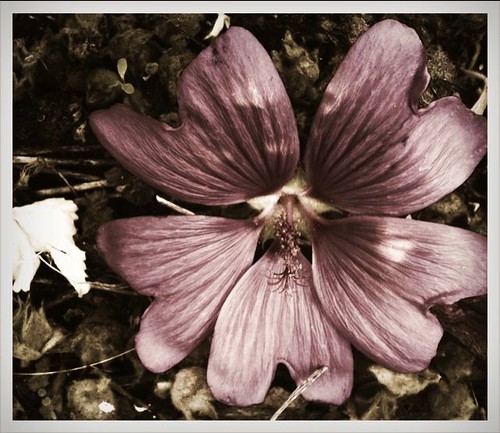
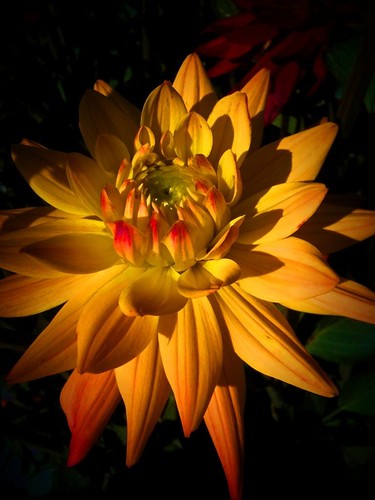
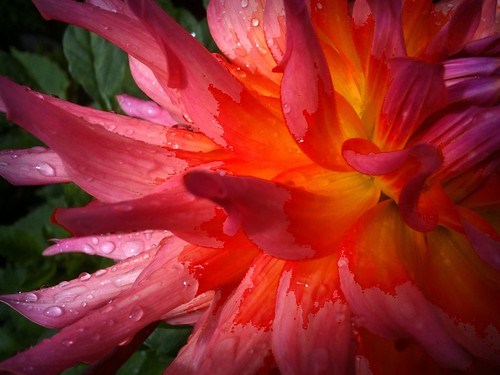
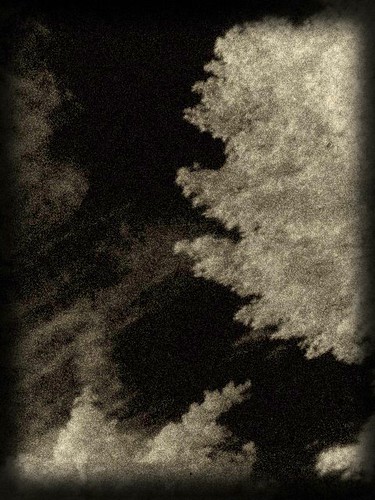
Here are some more of my favorites - all taken and edited directly on the iPhone:

Rose Mallow 2009

Dahlia in the morning light - edited version

Dahlia on the patio 2

iPhone Infrared 2009 #1


Labels: , , ,

If you'd like to use images in this blog post, please e-mail paul(at)paulmphotography.com

Friday, June 26, 2009

New "camera" -- again...

Well, actually, since my Sprint contract was up and I wanted an iPhone, I got one of those. I initially bought the cheapest 8-gig 3G version, but the day the 3GS came out, I took that back and got that one.

A week later, I finally am getting a chance to play around with the built-in camera and on-phone photo editing tools. Wow. Just. Wow...

Picnic Textures

I'm going to have to swap it, however, because as you can see in the top-right corner of this photo here, Apple's QC has... issues... I love my Macs, but this flaw in the brand new iPhone camera (only on my phone at least from what I've seen this far) is a bit frustrating...

iPhone Sunset

Labels: , , ,

If you'd like to use images in this blog post, please e-mail paul(at)paulmphotography.com

Monday, March 02, 2009

Catching up...

Wow, it's really been a few months since I last posted here. A different year, even! No worries - I'm still taking photographs. I've just been too busy to write about it. What better to do with a sick day than to catch up a little bit on what's going on in my world of photography...

A few months ago, I started searching for a new carry-with-me-everywhere camera. Of course, I did this very same thing about a year ago -- for a camera to keep in the CAR with me, and decided upon the Panasonic FZ-10. Dang, a quick search of the archives tells me that I didn't even write about my mental process behind THAT camera search. I've really neglected this place!

So it sounds like I need to go back a little further than I originally thought when I grabbed the last cup of coffee on the pot and popped in some Simon & Garfunkel on the iTunes.

The original story of what I wanted, ironically enough, was originally posted in the off-topic section of a baseball forum I hang out on. Since you have to be a member, I believe, to view that section of the site, here's a snippet from that post just so I have it here (in case something happens to that site) that captures my thoughts on what I was looking for in such a camera originally:
Here's what I want:
  • Full control over the camera
  • Hotshoe to trigger external flash
  • Focus control on the lens itself
  • No shutter lag
  • A camera that doesn't frustrate me
  • Image Quality (good color & clarity, but I know noise will be an issue)
No, I'm not looking for a semi-dSLR. I'm looking for a smaller-ish camera that will at least fit in my coat pocket but doesn't have to be tiny, that gives me almost the same level of control as my dSLR. Basically, something that doesn't get in the way, and that I can take with me without having to lug 30 pounds of camera gear in my big, bulky bag. I want a camera with me at all times, and my cell phone camera doesn't count. There really are only two cameras that I've found that will meet these requirements.

1) Leica Digilux 1.
2) Canon G5.

As it turns out, what I ended up buying was a Panasonic FZ-10, about $50-100 dollars less than what I'd budgeted for. I was sacrificing a bit of pocketability (which, as it turns out, was too much of a sacrifice for me) for some massive zoom -- at f/2.8 throughout -- and SLR feel. It had everything I wanted - even the ergonomic-correctness of a manual-focus ring around the lens area (almost right where I'd reach for it on my SLRs!).

I shot with it for the better part of the year (I bought it in April, 2008), creating a set on Flickr for my better shots. I shot my first concert with it -- having both front-row tickets and f/2.8 throughout (combined with manual mode) really helped -- and fell in love with the camera, both for it's still and video quality.

My only problem, of course, was that the camera was just plain too big for me to really use it. I'd leave it in my wedding photography fanny pack in the car, rather than carry it with me everywhere, defeating the ultimate purpose of why I bought the camera in the first place. If I was going to carry a camera bag, I'd just as well take my D200 with a lens or two and a flash.

So, I went on another hunt. I wanted something even smaller but nearly as flexible. I also again set my budget around $150, since I didn't have a lot and didn't want to spend a lot.

I'd done some research and decided that ultimately I wanted either a Canon G10 or a Panasonic DMC-LX3 (or, heh, the Leica equivalent -- the D-Lux 4). But both of those cameras are well above my $150 budget (and the Leica was well-well-WELL above that!). I decided against the G6 (and previous models) because I didn't like the bodies as much as I liked the new body design starting with the G7.

As I'm wont to do relatively frequently, I stopped into the local pawn shop on my way home from picking up my son from school. It's right around the corner, so we do that a lot. He looks at movies and I look at cameras. It's become quite the ritual, really.

Looking in the camera case that particular visit, I noticed this camera:


A Kodak V1253 point-and-shoot, 12 megapixel camera. Two things instantly grabbed my attention. 1) The 16:9 shooting mode for both still AND video and 2) the HD video recording with stereo microphones! One thing that I LOOVED about my FZ-10 was the fact that I could record high-quality video with decent audio. This camera had that and more -- it allowed me to zoom while recording, 720p HD recording and built-in stereo microphones!

Since the store has a pretty decent return policy, I decided to spring for the camera and put it through the wringer over the weekend to see if it would work out for me. I mostly did a lot of video testing, which was fun and neat and all, but I wasn't buying a video camera - I wanted a still camera first, with the bonus of having video if I needed it.

I was having a little problem making decent, usable photos with the camera. After all, while it did have ISO 1600, it did NOT have Optical Image Stabilization. That's huuugely important in a camera, especially in one so tiny. One nice thing about the weight and bulk of a DSLR (and to a certain extent my FZ10) is that it allows you to provide some stability for taking slower-shutter-speed photos. A compact, point-and-shoot type camera exploits any sort of bad technique you have for pressing the shutter, giving you a better liklihood of blurry shots due to camera shake. Having OIS is a big help in allowing you to take sharper photos at slower shutter speeds.

With smaller sensors, too, compact point-and-shoot cameras don't really handle ISOs above 200 very well -- even newer-generation cameras, too (they use heavy noise-reduction to smear out the noise, at the cost of fine details and plasticy-looking images). While the Kodak did have an ISO 1600 mode, the image quality was very unusable. So, not only could I not bump up the shutter speed by increasing the ISO, I was stuck without having OIS to help me through those 1/5th shutter speeds.

When I was able to get decent shots, I fell in love instantly with the 16:9 composition framing. It's like stepping up from an older tube TV into an HD LCD or Plasma or something -- more room on the screen gives you more compositional elements to compose with. This is probably my favorite image I made with the Kodak:
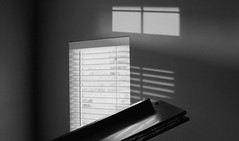
Light Jazz in the Living Room, 2009

While that photo is relatively interesting and certainly started the ball rolling on a new direction w/composition in the 16:9 mode, I ultimately took the camera back since the photo quality was less-than-stellar. Yes, the HD video recording was very cool, especially in a compact size. Were video my main desire, I'd certainly give this camera another look. But it wasn't. The no-OIS thing combined with a sloooow lens (not much bigger than a pinhole, really) and very poor high-ISO performance was the kicker.

And back to the drawing board I went.

Looking further into cameras that would give me what I wanted in a compact size, I looked back a few generations at the Panasonic LX1. It wasn't quite the LX3 that I wanted, but it did have a lot of what I liked about the Kodak -- the 16:9 sensor. And I found one for the same price I paid for the Kodak. They're actually quite hard to come by on eBay, but wow I'm really glad I made this decision!

The LX1 is "only" 8.4 megapixels (vs. the 12 of the Kodak), but they're far more usable. It only goes to ISO 400 (and that's REALLY pushing it, especially in color), and is a little bit bigger than the Kodak was. But it's a much better fit for me. It's essentially the same camera as the Leica D-Lux 2, only with a different metal used for the body, a little extra grip that the Leica doesn't have (which I really like better) and missing the little red "Leica" badge. Sure, the Leica looks cooler (although I believe it only comes in silver, and I like the black of the LX1 MUCH better). But the Panasonic for all intents and purposes is exactly the same camera -- for less than half of the cost of the Leica version. I've created a set for the LX1 on my Flickr account.

Last weekend I re-visted my favorite waterfall in the Columbia Gorge -- LaTourelle Falls. While my dSLRs were in the car, I only took my Mamiya RB67 ProS (I know, I know, I didn't mention this camera either - long story for another day, I suppose) and my LX1. Ultimately, I might make some photo excursions with my RB in a bag and the LX1 on my belt. I know I'll still be able to get fantastic shots, even if I'm a little dysfunctional with the RB. This LX1 is an amazing camera in a tiny package.

Exactly what I was looking for.
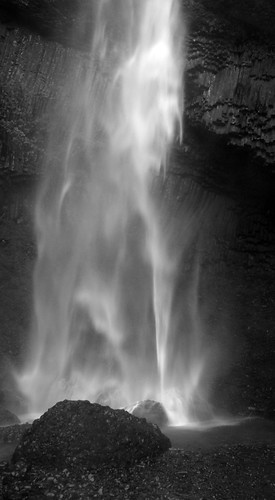
LaTourelle Falls Black & White, 2009 #3

Labels: , , ,

If you'd like to use images in this blog post, please e-mail paul(at)paulmphotography.com

Monday, May 26, 2008

Out with the Old, In with the New

Sadly, I retired my first dSLR last week. I sold it to someone looking for a fast camera for shooting sports -- still a very good use for it. Here's the last good shot I made with my D1H -- it served me very well for over two years, even if it was a generation or two behind the current times when I purchased it.


But the good news -- to replace it, I got a used and somewhat-abused, but still functional D200. I'm the type of person who likes to actually use their equipment, not admire it sitting on a shelf. So, when the opportunity to save some cash arose by grabbing a D200 with some cosmetic issues (after taking a bit of a plunge off a tripod), naturally I'm going to be interested. Unless the camera doesn't work, I don't really care if it's not in mint condition. Same thing for my lenses. I'm sure I was a photojournalist in a former life or something...

By finding this deal, too, though, I was able to purchase a new lens along with the camera, for about the same price as what D200 bodies alone are going for nowadays. The lens I got is a 35mm f/2 AF-D. It's honestly one lens that I didn't think that I needed, but when I was looking through the viewfinder with the lens, I noticed that it seemed to match the normal viewing perspective. This makes sense when you think about it -- a 35mm lens on a 1.5x digital SLR becomes roughly a 5omm lens on a full-frame or film camera. So, yeah, after never really owning a 5omm when I shot film, I now have the equivalent of 50mm f/2 in digital.

And I'm recognizing how awesome this can be.

I already have a 20-35mm f/2.8 lens, but that sucker is huge. This small, compact lens gives me an extra stop, too, over that lens. It's wide enough to get a lot of stuff in, but not so wide that everything gets distorted. It's really a versatile little lens.

But the thing that I REALLY like about it is that it focuses very, very closely. I'd need to look up the stats, but I'm guessing it's about 3 inches in front of the lens. Combine that with the low-DOF f/2 opening, and it makes for a PERFECT lens for me to do my "Group F/1" stuff...


I love the bokeh! And the "Vivid Enhanced" setting on the D200 is really really nice.

In addition to being a great macro lens, it's also great as a portrait lens. Again, it's wide enough to get a decent head/shoulders portrait without having the distortion of an extra-wide when you get close to shoot the head & shoulders.

When I bought my D2H, I debated long and hard over whether or not to get the D200 instead. I ultimately decided that I preferred the machine-gun speed over the higher resolution. Especially since the D200 had 10 megapixels -- more than I really need. But now, I've decided that in shooting weddings more and more, I need all the resolution I can get. So, I've complemented my D2H with a D200.

Both of them are, really, more camera than I can use. Maybe in 2-3 years, I'll upgrade to a D3 and a D300, but for now I'm set...

Labels: , , ,

If you'd like to use images in this blog post, please e-mail paul(at)paulmphotography.com

Sunday, January 13, 2008

Film, Revisited...

I just essentially traded my old film camera for the film camera I've wanted since I first started getting into photography - the Nikon F4s. Granted, digital offers so much more for so much less in the long run. With as many pictures as I take during the year, I certainly can justify spending $1000 on a dSLR. But I still will always have at least one film camera body. And I LOVE LOVE LOVE my 'new' F4s. I haven't even uploaded the pictures to my computer from my D2H, but here's one shot I made about three hours ago on my F4 (with the Nikkor 400mm f/3.5):


Granted, that's a crappy scan from the 1-hour photo center at Fred Meyer. If I scan the negative, I can get a little more tonality and texture out of the wall. But, honestly, that's pretty darn good!

And there's something about the smooth whir of a frame of film advancing in the back of a Nikon F4s. Plus the camera itself is a work of art.

Film is not dead. Not by a long shot. I can't wait to get some Fuji Velvia 50 through that thing...

Edit -- here's the same shot w/the 1.5x 'teleconverter' that's inherent to the dSLRs, from my D2H:

Labels: , , , , ,

If you'd like to use images in this blog post, please e-mail paul(at)paulmphotography.com

Friday, July 27, 2007

New Camera!!! D2H First Pix (And a comparison w/my D1H)

I had the opportunity to purchase a second body, as with the wedding I shot a few weeks ago, I realized that I badly needed one if I'm going to continue shooting weddings. Not only that, but my D1H is having issues with the sensor. There's this long red line down the left side of all my pictures, and it's getting more and more difficult to clone it out. After much deliberation, I decided I'd stick with my budget and buy a D2H. Yes, for a few hundred more, I could've bought a D200, but I didn't want to stretch out the budget any further than I already planned. I also wanted to save hard drive space, since megapixels take them by the droves. While I'd prefer the D2H had a sensor that was 6 megapixels, its 4.1 MP should be fine for most of what I do. Heck, I was able to print out 12 x 18s from the 2.7 MP of my D1H, so I expect that's not going to stop (and the prints I do make with the D2H should be better at 12x18 than those from my D1H).

One of the things I was most curious of was how the color rendition compared between my D1H and the D2H. Since my D1H didn't have Color Mode III (Nikon's weird, proprietary scheme for naming colorspaces like Adobe's sRGB, etc...), I often enjoyed the extra saturation that Mode III provided by converting my Raw NEF files to Mode III. Since Mode III was actually introduced with the D2H (IIRC - I'm not sure the D100 didn't have it first), I was curious how the conversion compared with shooting in Mode III natively w/the D2H. So, I made my first shots with the intent of making such a comparison.

Nothing scientific, really. I just took the same picture twice -- once on each camera, swapping lenses on the cameras -- and tried to keep the settings the same. Here are some side-by-side comparisons of the two cameras. Natively shot in Mode III on the D2H, and converted to Mode III on the D1H frames in Capture NX. I made sure to use the same White Balance settings, ISO settings, and saturation settings.

D1H (saturation set to 'moderate' in Capture NX):


D2H (saturation set to 'moderate' in Capture NX):


(yeah, mom, I realize my backyard needs a visit from the lawn mower, and the clean-up crew -- just wanted a quick snap of something with a lot of different colors)

D1H (saturation set to 'normal'):


D2H (saturation set to 'normal'):


D1H (saturation set to 'normal'):


D2H (saturation set to 'normal'):


Nothing special in any of these pictures -- I literally grabbed my cameras and headed out to grab some quick pics, and didn't but barely tweak the settings in Capture NX so they matched. No PS work here.... I think the tomato blossom picture shows the difference the best. The other photos have too many variables involved that were different. But the yard shot does show, too, that the in-camera setting for Mode III is a little more saturated than the conversion of the D1H NEFs in Capture NX.

It only took me about 5 minutes to figure out where things were on the D2H that I wanted to tweak. Awesome.

I love, love, love this new camera. My only gripe is that the aperture setting on my 100 f/2.8 E lens attached to the PK-13 tube seemed to not work correctly all the time when I programmed the focal length and f/stop into the D2H. I had to wiggle things several times, and unmount the lens to get the aperture setting on the camera to change back to 2.8, when I changed the aperture on the lens. This will take me some more research.

Labels: , , , ,

If you'd like to use images in this blog post, please e-mail paul(at)paulmphotography.com